Walleye Habitat and Characteristics
_________________________
Where do walleye live? Walleye hold in large, cool lakes and medium-to-large rivers across most of North America, favoring packed sand, gravel, or rocky bottoms near structure. Because their light-sensitive eyes give them a low-light edge, they sit in deeper or shaded water by day and move shallow to feed at dawn, dusk, and after dark. The more you know about your adversary, the better success you’ll have.

Scientific Name: Sander vitreus, aka Stizostedion Vitreum
Fish Family: Percidae
Other Names: yellow pickerel, pickerel, yellow walleye, colored pike, walleyed pike, jack salmon, jack, walleyed pike-perch, pike-perch, pike, gray pike, green pike, ‘eye, marbleye, glass-eye; French: doreé
| Scientific name | Sander vitreus (family Percidae) |
| Range | Most of Canada and the northern/central U.S.; widely stocked elsewhere |
| Preferred bottom | Packed sand, gravel, rock — near weed beds, timber, drop-offs, dams |
| Temperature | Tolerates 32–90°F; most active around 65–70°F |
| Spawning | Spring, water ~40–50°F, over gravel/rock (rivers) or reefs and shoals (lakes) |
| Typical size | Up to ~30 in.; most trophies 10–15 lb, exceptional fish larger |
| Lifespan | ~5–6 yrs in heavily fished waters, up to 15–20 yrs elsewhere |
| Peak feeding | Dawn, dusk, night, and overcast or windy “walleye chop” days |
Walleye Biology
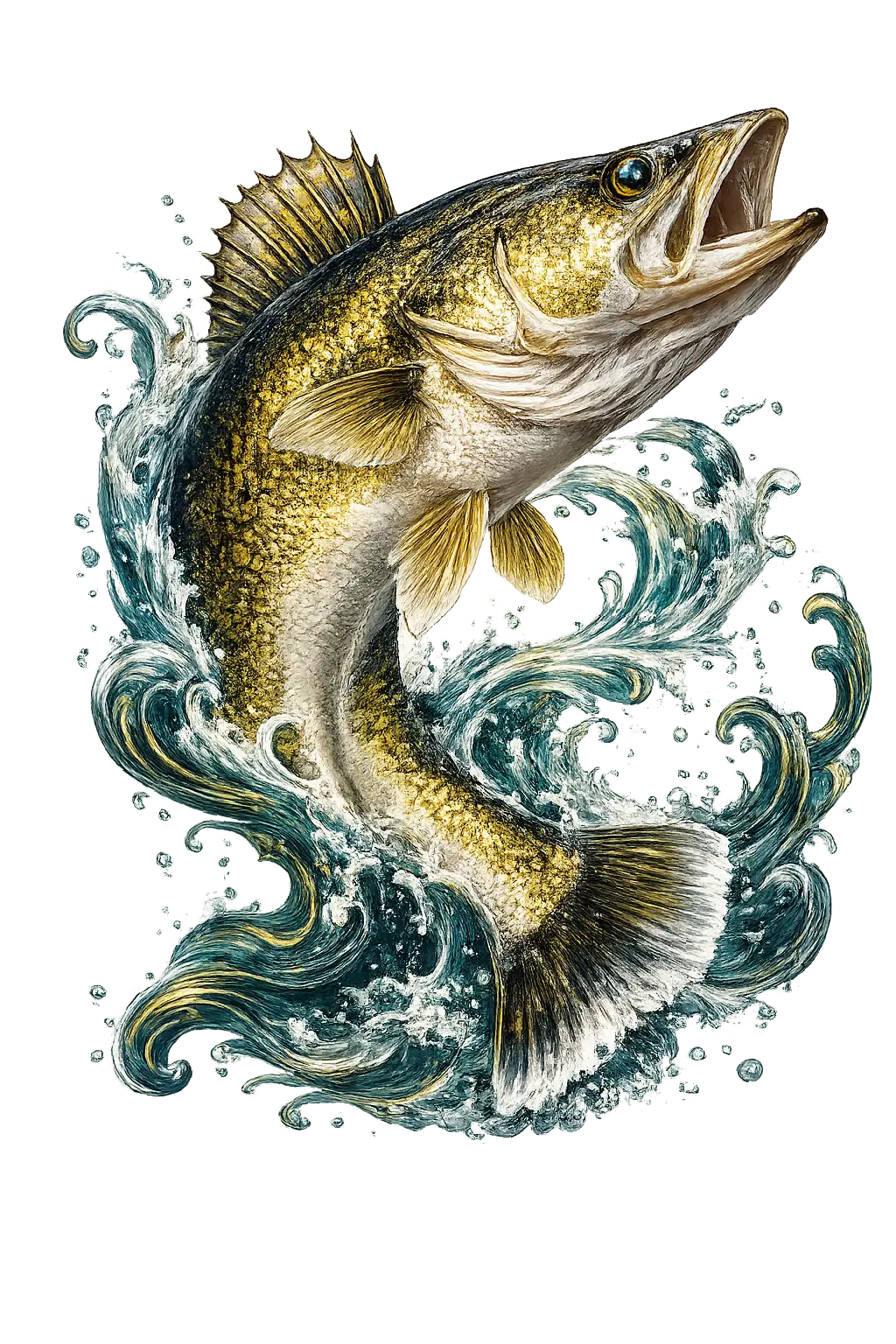
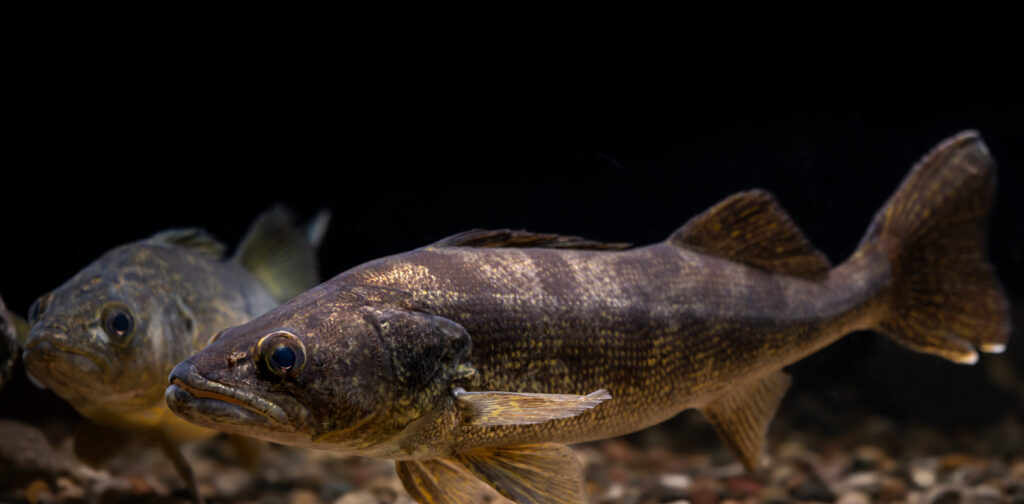
The walleye is olive to off brown in color, broken up by darker stripes extending down the flanks to its lighter colored belly. There is a noticeable dark spot at the base of the last spines on the first dorsal fin. The dorsal and anal fins are distinctly spiny and the mouth contains an army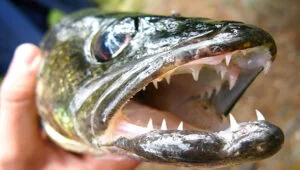 of very sharp teeth. The walleye is named for its large, marble-like glowing eyes, caused by the tapetum lucidum, a reflective layer of pigment that allows it to see prey at night and in deeper, dark water. Its lifespan ranges from 5-6 years in heavily fished areas to 10-20 years in less exploited waters. A mature walleye can reach about 30 inches and, in exceptional cases, 20+ pounds — though most trophy walleye run 10–15 pounds.
Walleyes spawn in spring, soon after the ice breaks up and the water temperature hovers roughly in the 40 to 50° range. In rivers, they prefer to broadcast their eggs over gravel or rocky areas. Lake walleyes will spawn in weeds, or over reefs and shoals.
Young walleye feed on plankton and insect larvae until they’re large enough to eat fish smaller than them, namely minnows. Minnows remain a favorite meal throughout the walleye’s life, though I’ve heard tell they also appreciate yellow perch, largely because they frequent the same locations and share similar diets. But, don’t let the walleye’s love for fish keep you from using night crawlers, leeches or artificial baits. The pros will tell you walleyes feed on a variety of critters if presented correctly, and I can second that from personal experience.
Walleye Habitat
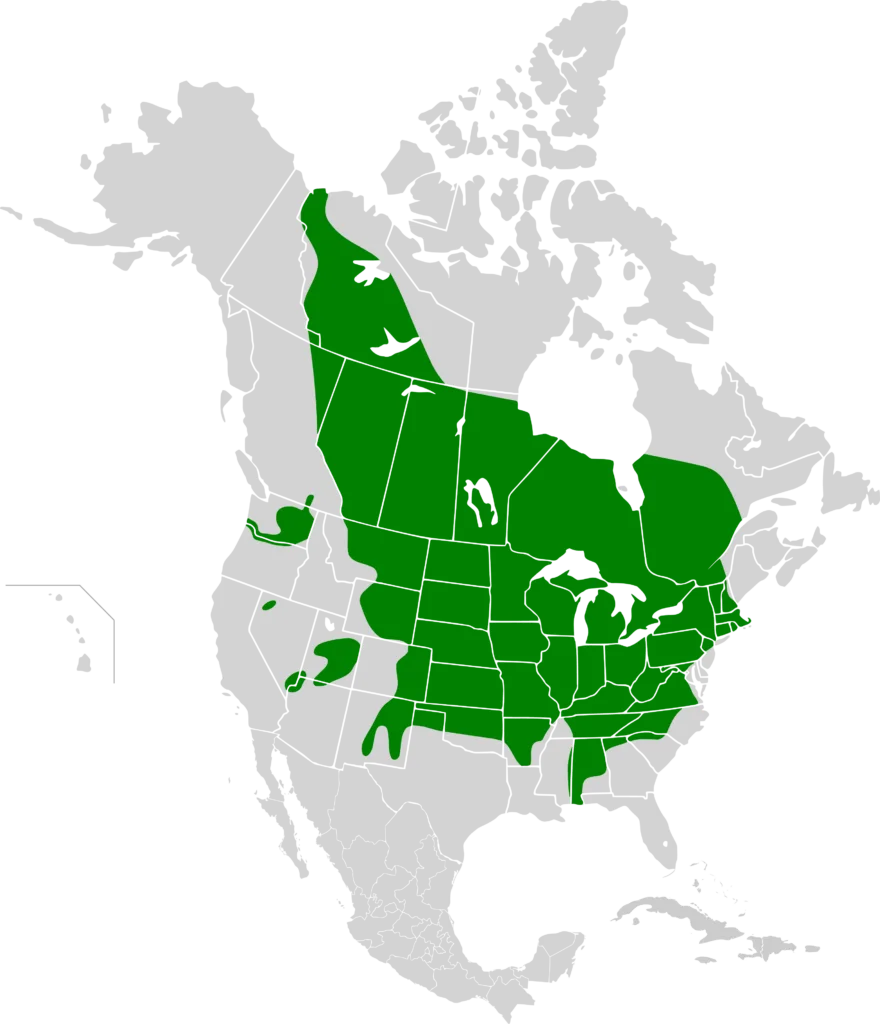
Walleye are distributed across a wide swath of North America, from the Arctic down through most of Canada to the St. Lawrence and Great Lakes. They are also found in the Mississippi River basins and the Gulf drainages of Alabama and Mississippi. Stocking programs have introduced walleye to Atlantic Coast drainages from Vermont to South Carolina, and throughout the western states, with the exception of California.
 You’ll find them in lakes, and in medium to large rivers. They do particularly well in large, shallow lakes prone to moderately turbid conditions.
Walleyes are particular about their surroundings. Their hangouts depend on the season, time of day, water temperature, availability of baitfish, etc. They can tolerate temperatures from 32° to 90° Fahrenheit, but they’re happiest in 70 degree waters. Lake walleyes will usually hang at the bottom during daylight and move to the shallows to feed around dawn and dusk. Similarly, river walleyes will spend daytime near drop-offs or in holes to escape the sunlight and move to the shallows in the dark hours. They also like to hold near dams, out of the main current. No matter their location, walleyes prefer packed sand, gravel or rocky bottoms and will use weed beds, submerged trees or other structures as cover during the day.
Hopefully, this information on walleye habitat gives you a good foundation for how to catch them.
But Wait! Three types of Walleye?
Well, technically, yes. They are the aforementioned Walleye, the Sauger and the Saugeye. Walleye and Sauger are cousins and the Saugeye is a hybrid. They're all members of the perch family, have similar looks, enjoy the same foods, can often be found in the same waters, and taste exactly the same.
But, there are differences and the first is size. Full grown walleye can grow to a length of 30 inches and weigh upward of 15 pounds. Sauger generally reach up to 15 inches and 4 pounds.
Though often found in the same waters, both have their preferences. Walleye excel in deep, cool, clear lakes and are partial to hard, rocky bottoms. Sauger do well in streams and rivers with deep, murky pools and soft, sandy or muddy bottoms. In lakes, sauger will go deeper than walleye, because as good as walleye sight is in the dark, the sauger's is even better.
The saugeye, as you may have guessed by the name, is the result of crossing a female walleye with a male sauger. Though this hybridization does occur naturally, the saugeye is almost exclusively produced in hatcheries and stocked by state DNRs. In Ohio, for instance, the Division of Wildlife added 25 million saugeye across the state. Saugeye fare much better in reservoirs than walleye because, like the Sauger, their eyes are better adapted to the lower light of deep, murky water.
Walleye Eyes
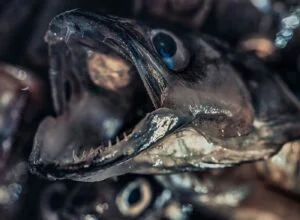
Their sensitivity to light dictates that walleyes hang out in deeper pools or in the shelter of sunken trees or weed beds during the day. They take advantage of their visual acuity to feed at dawn, dusk and into the nighttime hours. However, walleyes will feed during daylight hours if the water is murky or if the weather is overcast. They are also more active on windy days when “walleye chop” cuts down on light penetrating the water.
Walleye Habitat FAQ
Where do walleye live?
Walleye live in lakes and medium-to-large rivers across most of North America, and do especially well in large, shallow, moderately turbid lakes. They relate to packed sand, gravel, or rock near structure — holding deep or shaded by day and sliding into the shallows to feed in low light.
What water temperature do walleye prefer?
Walleye tolerate water from 32°F to 90°F but are most comfortable and active around 65–70°F. In summer they follow that comfort zone into deeper, cooler water during the day and move up to feed after dark.
What temperature do walleye spawn at?
Walleye spawn in spring, soon after ice-out, as water warms to roughly 40–50°F. In rivers they broadcast their eggs over gravel and rock; in lakes they spawn over reefs and shoals.
What’s the difference between a walleye, a sauger, and a saugeye?
The walleye is the larger fish (to about 30 inches) and favors deep, cool, clear lakes with rocky bottoms. The sauger is smaller (to about 15 inches) and prefers murky rivers with soft, sandy bottoms. The saugeye is a hatchery cross — a female walleye bred with a male sauger — stocked heavily in reservoirs because, like the sauger, its eyes handle low light well.
Is there such a thing as a blue walleye?
Sort of — but the famous one is gone. The “blue pike,” or blue walleye (Sander vitreus glaucus), was a blue-gray Great Lakes walleye once so abundant that Lake Erie landed it by the millions. Overfishing and pollution collapsed the fishery in the early 1960s, and the U.S. Fish and Wildlife Service declared it extinct in 1983 — and later genetic studies suggest it may never have been a truly separate subspecies. Anglers still catch strikingly blue walleye in some Canadian Shield lakes today, but that’s a different thing: a color phase caused by a protein called sandercyanin in the fish’s skin mucus, not the lost blue pike.
Why do walleye have glassy eyes, and can they see in the dark?
Walleye have a reflective layer in the eye called the tapetum lucidum that gathers available light, letting them see prey in low light and in murky or deep water. That night-vision advantage is exactly why they feed best at dawn, dusk, after dark, and under a good “walleye chop.”
What’s the best time of day to catch walleye?
Dawn and dusk are prime, and the bite often extends into the night. Overcast, windy, or murky conditions can also trigger daytime feeding.
Image credits: “Walleye range map” by Cephas, CC BY-SA 4.0; “walleye weight–length graph” by Corinne68, CC BY-SA 3.0 — both via Wikimedia Commons. Walleye watercolor (1896) by Sherman F. Denton, and the teeth and fry photos (USFWS), are public domain.